The open house ideas that consistently produce offers work in three phases: getting the right people through the door, delivering an on-site experience worth talking about, and following up fast enough to convert interest before another listing wins the buyer.
This page gives you 27 specific, copy-paste-ready ideas organized by phase. Each idea includes a specific format, number, or action so you can use it today without guessing.
Promote the open house with video, social, and signs
Promotion drives attendance. Post a 15-to-30-second promo video to Reels and Facebook three to five days out, knock doors in a 25-home radius, and list the event on Zillow and MLS before spending on ads.
Nine promotion ideas that move attendance:
-
Post a short promo video 3 to 5 days before the event. A 15-to-30-second clip showing the home’s best feature or exterior outperforms a static image post. Shoot vertical 9:16 for Reels and Stories. For publishing cadence and channel strategy, see real estate marketing tips.
-
Knock on 20 to 25 doors in the surrounding neighborhood. Hand each neighbor a printed invite and tell them they can bring a friend. Neighbors often know a buyer in their own circle before that buyer contacts a portal.
-
Send a “neighbor preview” window the afternoon before the public open house. Giving adjacent homeowners a 30-minute early-access slot makes them invested in the sale. They become advocates who mention the home to family and friends.
-
Boost a Facebook or Instagram post targeting your ZIP code. A $15 to $25 boost targeting your ZIP plus buyer interest categories (home decor, moving, real estate), as documented by Meta for Business, reaches people who have never followed your page.
-
List the open house on Zillow, Realtor.com, and your MLS listing. Most MLS and portal workflows let agents add open-house details without extra ad spend; confirm that syndication is active in your listing platform at least a day before the event. The “open houses this weekend” filter drives real search traffic on Saturday mornings, a trend the National Association of Realtors has documented through Google search data.
-
Plant directional signs at every nearby intersection the morning of the event. Use bright arrows from at least three directions, and place the first sign a quarter mile out so buyers who miss a turn can recover.
-
Text your warm contact list a short personal message three days out. Keep it two sentences: “I have a great listing at [address] open Sunday 1-3 pm. Know anyone looking in [neighborhood]?” Personal texts get read faster than broadcast emails.
-
Post in local Facebook groups and on Nextdoor. Community groups in most markets have thousands of local members. Nextdoor for real estate reaches homeowners already paying attention to neighborhood activity.
-
Pin your promo video to the top of your Instagram and Facebook profiles for the four days leading up to the event, so anyone who visits your page sees the open house before anything else.
| Promo asset | What to show | When to publish | Best use |
|---|---|---|---|
| 9:16 Reel or Story | Animated exterior hero shot, date, time, address, and agent outro | 3 to 5 days before the event | Primary attendance driver on Instagram and Facebook |
| 1:1 feed post | Best room or exterior frame with open-house time in the caption | 3 days before, then pinned through the event | Profile visitors and organic feed reach |
| 16:9 Facebook version | Listing exterior, one feature callout, event details, and agent branding | 3 to 5 days before the event | Facebook event page, groups where allowed, and boosted post |
| Same-day reminder | Short clip or still frame with time and address repeated | Morning of the open house | Warm contacts, Stories, and text follow-up |
On-site open house ideas that impress visitors and capture leads
The on-site experience captures every contact, answers buyer questions before they ask, and leaves an impression strong enough that visitors discuss the home on the drive back. Eleven concrete on-site ideas:
-
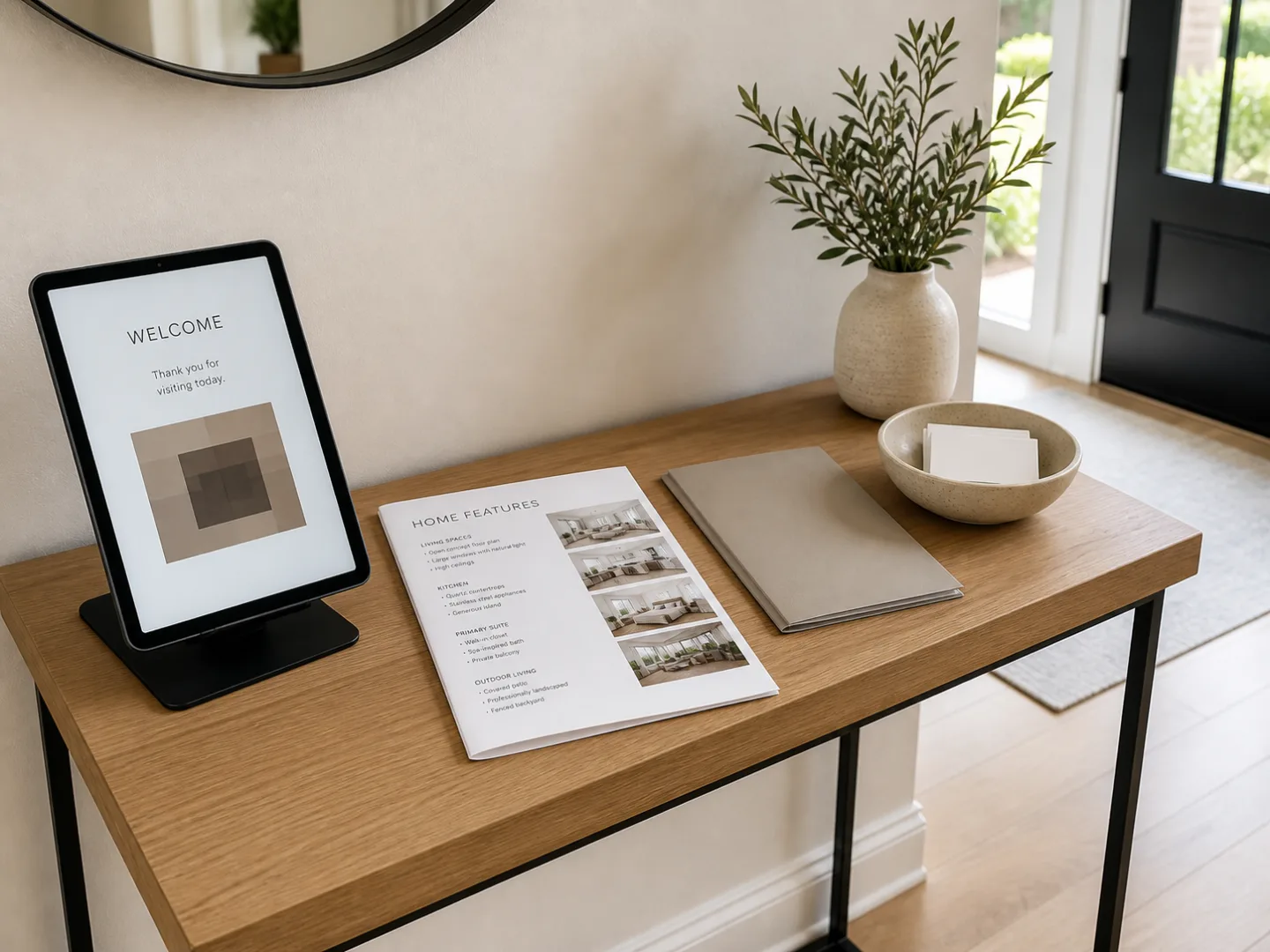
Set up a digital sign-in station at the door. A QR code linked to a short form collects name, email, phone, and move-in timeline in under 30 seconds. Paper sheets lose data and reveal your lead list to competitors who attend.
-
Print a one-page property feature sheet with all key specs. Include price, beds, baths, square footage, lot size, year built, school district, and your contact information. Buyers refer back to these sheets when comparing homes at the end of the day.
-
Write recent neighborhood comparables on a visible whiteboard or easel. Show the last three sold homes: address, sold price, and days on market. This grounds your pricing conversation without feeling like a pitch.
-
Stage a lifestyle vignette in the room that closes deals. Fresh flowers in the kitchen, a set coffee table in the living room, or a folded throw on a reading chair costs under $30 and makes the space feel lived-in.
-
Prepare one standout moment in the primary suite or remodeled room. Every home has a room that closes the deal. Make sure it is fully lit, smells fresh, and has one detail that surprises: a view, a soaking tub, or a custom closet organizer.
-
Lay out a self-guided tour map with room callouts. A printed room-by-room map with two or three feature callouts per space (“herringbone tile, installed 2023”) lets buyers explore at their own pace and stay on-site longer.
-
Have recent comparable sales ready on your phone or tablet. When a buyer asks whether the price is fair, pull up the last three comps in seconds. This builds credibility and moves the conversation toward an offer.
-
Offer a neighborhood lifestyle guide as a printed takeaway. Include the nearest coffee shop, grocery store, park, school ratings, and walk score. Buyers choose a neighborhood as much as a home, and this printout shows you understand their decision.
-
Provide refreshments, water at a minimum. Visitors who stay longer have more time to mentally move in. A simple water station, or a coffee setup for a weekend morning event, keeps people comfortable and on-site.
-
Run a drawing to encourage sign-in. A $25 coffee gift card entered by completing the sign-in form consistently converts hesitant visitors who would otherwise wave past the table. The cost is a fraction of a single paid lead.
-
Capture a short walk-and-talk video during setup or immediately after the event. Post it to your Reels and Stories the same afternoon. Buyers who missed the event in person have a reason to reach out, and your followers see proof you are active in the market.
Follow-up ideas that turn open house attendees into offers
Fast follow-up wins the deal. Text every attendee within 24 hours, reference a specific detail from their visit, and move the most interested leads into a short sequence before another listing takes their attention.
-
Text every attendee within 24 hours with a personal note and a link. Include a link to the listing, a photo gallery, or the video recap. Text is opened faster than email, and a same-day message reads as attentive rather than aggressive.
-
Send a personalized email the following morning. Reference one thing from their visit (“You mentioned the kitchen layout caught your eye”) and attach the feature sheet, the comparable sales, and one clear next step such as a private showing link.
-
Call the three most interested visitors within 48 hours. The buyers who asked detailed questions, returned for a second room, or stayed more than 20 minutes are worth a direct call. Ask one feedback question: “What would need to change for this to be your next home?” Then mention any other serious interest you have received and name a concrete deadline: the date you plan to review offers or the window for scheduling a second showing. Buyers who feel genuine urgency and a personal connection are the ones who move from attendees to written offers.
-
Add all attendees to a market-update email sequence. A biweekly email with similar listings, neighborhood price changes, and local news keeps your name visible to buyers who are still deciding. The real estate email marketing guide covers full follow-up sequence structure and templates.
Open house ideas matched to your budget and niche
Not every open house needs the same approach. Three tactics matched to common situations:
-
Budget under $50. Bring a digital QR sign-in, skip catering, and put the full budget into a $15 to $20 Facebook post boosted to your ZIP code. One well-targeted social post reaches more serious buyers than three unread flyers.
-
Luxury listing. Hire a photographer for same-day photos or a videographer for a walkthrough reel posted that same evening. Offer a premium printed brochure with comparable sales and a neighborhood lifestyle guide. Pair with unique real estate marketing ideas for additional high-end tactics.
-
New or solo agent. Invite a local lender, home inspector, or stager to co-host. They promote the event to their own contact lists, you split the setup, and both parties collect leads from the same afternoon. See creative real estate marketing ideas for more co-marketing approaches.
Open house mistakes that kill attendance and how to fix them
Even well-priced listings lose buyers to five common and fixable errors:
Posting only to MLS with no social promotion. MLS open house listings reach active portal browsers. Social video reaches passive buyers who are not yet searching. Fix: post a 20-second promo video at least three days before the event.
Relying on a paper sign-in sheet. Handwriting is hard to read, fields get skipped, and sheets can be misplaced. Fix: place a QR code sign-in at the door and have a tablet as a backup so every visitor registers before exploring.
No follow-up plan drafted before the event. Agents who write their follow-up text and email the night before the open house send them within hours of the event with more specific, personal detail. Fix: draft your texts and first-contact email before you set up.
Arriving 15 minutes before the first visitor. Setup takes 30 to 45 minutes: directional signs, refreshments, sign-in station, printed materials, and a walk-through of every room. Fix: arrive at least 45 minutes early.
Walking out with no video content created. A two-minute walk-and-talk shot on your phone during setup or right after the event is the easiest content you will create all week. Fix: record before you break down the setup.
For the broader marketing strategy surrounding open houses, the real estate marketing ideas hub covers the full program. For written assets like follow-up emails and nurture sequences, real estate marketing strategies has working templates.
Create your open-house promo video
A slideshow video editor turns your listing photos into an animated promo video in three formats: 9:16 for Reels and Stories, 1:1 for feed posts, and 16:9 for Facebook and YouTube. Add a short voiceover or a caption overlay carrying the event date, time, and address, then post the finished video three to five days before the event. QR sign-in sheets, feature sheets, and neighborhood guides are useful on-site support; the promo and recap video is what drives attendance before the event and extends your reach afterward.
The full edit takes under an hour from an existing photo set, and the three cuts cover every channel you post to in the week before and the day after your open house.
Frequently asked questions
Good open house ideas span three phases: promotion (short promo video, neighbor door-knock, social post, directional signs), on-site experience (digital sign-in, feature sheet, neighborhood comps on a whiteboard, refreshments), and follow-up (text within 24 hours, personalized email the next morning, direct call to the top three leads within 48 hours).
Post a 15-to-30-second promo video to Reels and Facebook three to five days before the event. Knock on 20 to 25 doors in the surrounding neighborhood and hand each neighbor a printed invite. List the event on Zillow, Realtor.com, and your MLS listing, and boost a $15 to $25 Facebook post targeting your ZIP code.
Place a QR code sign-in form at the entrance that collects name, email, phone, and move-in timeline in under 30 seconds. A $25 gift card drawing entered by signing in consistently converts hesitant visitors. Back up the QR code with a tablet so no one walks through without registering.
Yes. Open houses connect buyers who want to experience a home before scheduling a private showing, and they generate agent leads from unrepresented visitors. The key is pairing the on-site event with strong pre-event promotion and a same-day follow-up sequence.